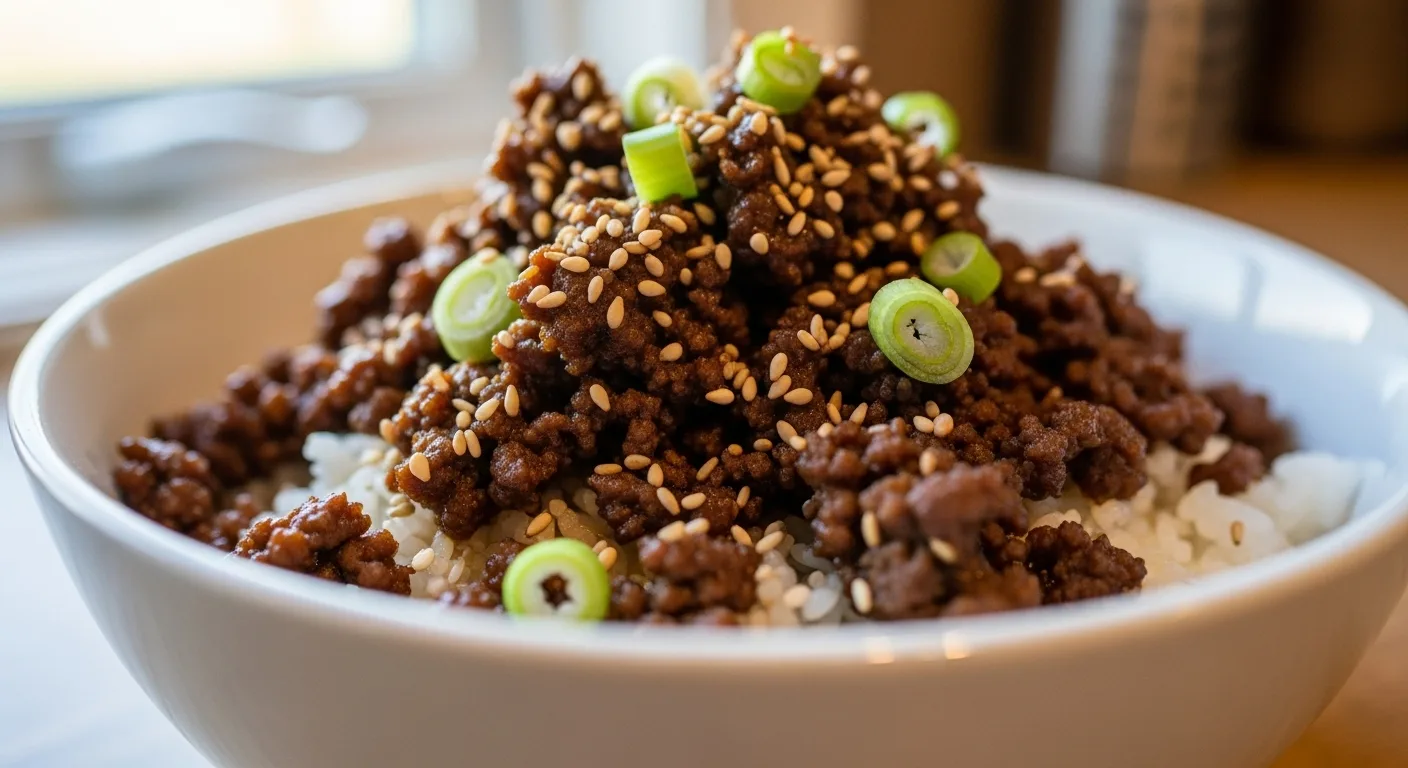

Okay, so I’ve been making this Korean ground beef bowl for like… three years now? And honestly, I can’t believe I’m just now sharing it because people won’t stop asking me for the recipe. Like, my sister literally texted me about it last Wednesday at 10 PM. Again.
Here’s the thing—I’m not Korean, I’ve never been to Korea (yet, it’s on the list), and I definitely stumbled into this recipe by accident. I was trying to make Mongolian beef one night, realized I didn’t have flank steak, and just threw ground beef in the pan instead. Best mistake ever.
Table of Contents
Why This Korean Ground Beef Recipe Actually Works
Look, I’m gonna be honest with you. Most Korean ground beef recipes online are either super complicated with ingredients you can’t find at a regular grocery store, or they’re so simplified they taste like nothing. This one? Right in the middle. You get that sweet-spicy-savory thing happening without hunting down 15 different sauces.
My neighbor Dave (who’s never cooked anything more complex than scrambled eggs) made this last month and sent me a photo like he’d just won a cooking show. If Dave can do it, literally anyone can.
The secret is gochujang. Now, before you click away thinking “I don’t have that weird Korean paste,” just… hold on. You can find it at Target now. Seriously. It’s usually near the Asian sauces, and one tub lasts forever because you only need a little bit. I’ve had the same container for like eight months and it’s still half full.
What Makes This Korean Beef Recipe Different
This isn’t your typical ground beef recipe where everything tastes the same. The gochujang gives it this deep, fermented, slightly funky flavor that’s addictive. And the brown sugar? Yeah, I know, everyone’s scared of sugar in savory dishes, but trust me on this one. It caramelizes with the beef and creates this glaze that’s… chef’s kiss.
I’ve tried making this “healthier” by skipping the sugar. Disaster. Complete disaster. It was just spicy and boring. Sometimes you just need the sweet to balance everything out.
Ingredients for Korean Ground Beef Bowl
Alright, here’s what you need. And honestly, the ingredient list is shorter than most pasta recipes, which is saying something.
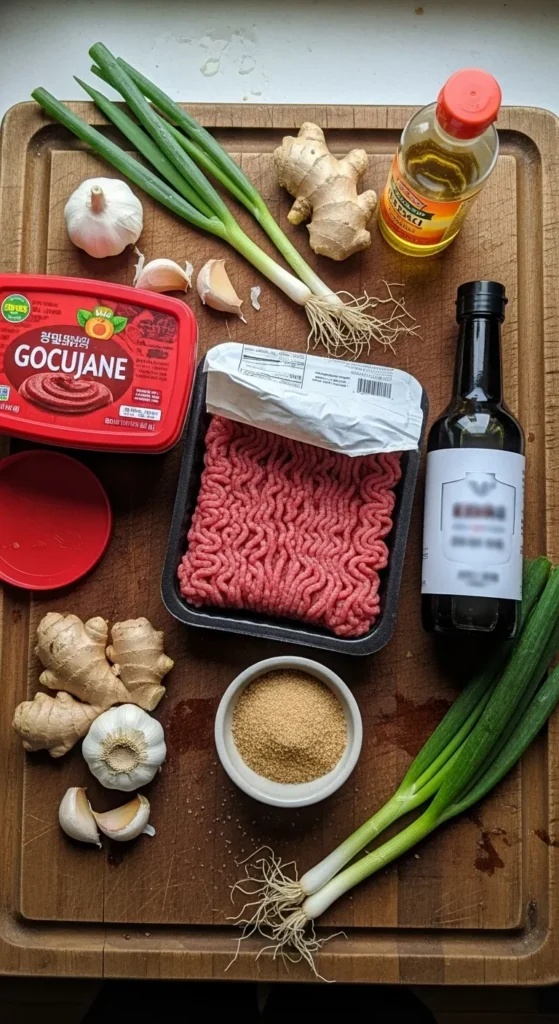
For the Korean Ground Beef:
- 1 pound ground beef (I use 85/15 because the fat adds flavor, but use whatever)
- 3 tablespoons gochujang (Korean red chili paste—don’t skip this, it’s literally the whole point)
- 3 tablespoons soy sauce (I use regular Kikkoman, nothing fancy)
- 2 tablespoons brown sugar (light or dark, doesn’t matter)
- 1 tablespoon sesame oil (the toasted kind if you can find it)
- 4 cloves garlic, minced (or like 6 if you’re me because garlic is life)
- 1 tablespoon fresh ginger, grated (or 1 teaspoon ground ginger in a pinch)
- 2 green onions, chopped
- Sesame seeds for topping (optional but they make it look fancy)
For the Bowl:
- 2 cups cooked white rice (jasmine rice is my favorite, but again, whatever you have)
- Cucumber, sliced thin
- Shredded carrots
- Kimchi if you’re into that (I wasn’t at first, now I’m obsessed)
Shopping note: Finding gochujang was a journey. First time I looked, I spent 20 minutes in the Asian aisle at Kroger like a confused person. It’s in a red tub, usually says “Korean Chili Paste” in English. Some brands are spicier than others—I use the Gochugaru brand because it’s not too intense.
Also, if you can’t find fresh ginger (or forget to buy it, which I do constantly), the jarred minced ginger works fine. My friend Sarah swears by it and says she can’t taste the difference. I can, but I’m annoyingly picky about ginger.
How to Make Korean Ground Beef (The Real Way)
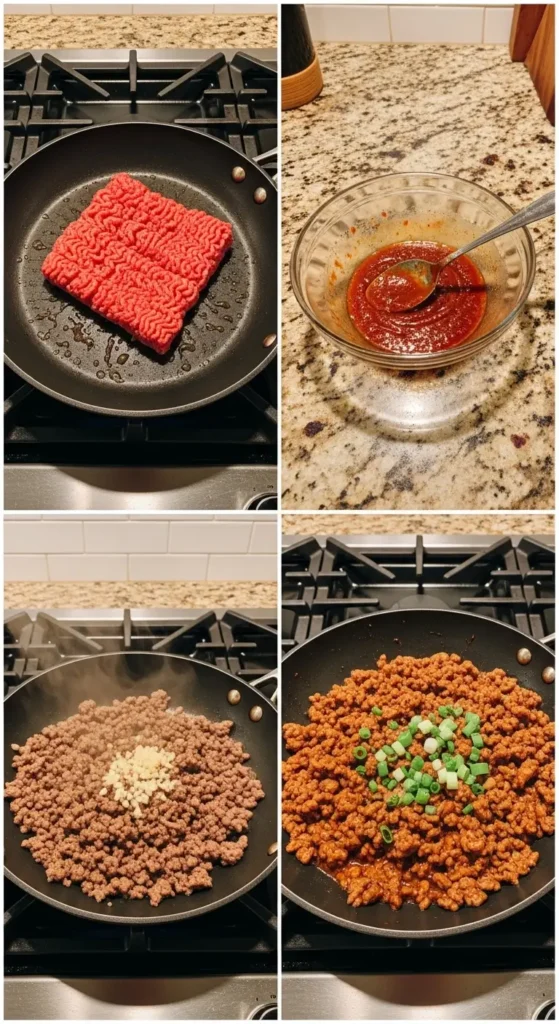
Step 1: Get a large skillet—like, the biggest one you have—and heat it over medium-high heat. Don’t add oil yet because ground beef has enough fat on its own. This is one of those things I learned after making this recipe like five times with oil and wondering why it was so greasy.
Step 2: Add the ground beef and break it up with a wooden spoon or spatula. I use this old wooden spoon that’s slightly burned on one edge from… an incident we don’t talk about. But it works great for breaking up meat.
Cook it until it’s browned, about 5-7 minutes. And here’s where people mess up—actually drain the fat. I know, I know, “fat equals flavor,” but there’s a limit. Too much grease and your Korean beef bowl turns into a gross, oily mess. Just tip the pan carefully over the sink (or into a can if you’re responsible about disposing grease) and let most of it drain out.
Step 3: While the beef is cooking, mix together your sauce. In a small bowl, combine the gochujang, soy sauce, brown sugar, and sesame oil. Stir it until the brown sugar mostly dissolves. It’ll look kinda thick and paste-y. That’s normal.
First time I made this, I thought I did something wrong because it looked so thick. Almost added water. Don’t do that. Once it hits the hot beef, it’ll thin out and coat everything perfectly.
Step 4: Throw the garlic and ginger into the pan with your cooked ground beef. This is important—oh wait, I forgot to mention—make sure you don’t burn the garlic. I did this last Tuesday because my neighbor knocked on the door to borrow a ladder (long story), and I came back to completely black garlic. Had to start over. Set a timer or something.
Cook the garlic and ginger for about 30 seconds until it smells amazing. Your whole house will smell like a Korean restaurant. Actually, scratch that—better than a Korean restaurant.
Step 5: Pour in your sauce mixture and stir everything together. Now here’s where the magic happens. The sauce will bubble up and get all caramelized and stick to the beef. Keep stirring for about 2-3 minutes until everything is coated and the sauce has thickened up.
It’ll look kinda dark and shiny. Some people panic at this stage because they think it’s burning. It’s not. That’s the brown sugar caramelizing, and it’s exactly what you want for this Korean ground beef dish.
Step 6: Toss in your chopped green onions. Save a few for topping because they make it look pretty, and honestly, we all eat with our eyes first.
Building Your Korean Ground Beef Bowl
This is where you can get creative. Or not. Sometimes I’m lazy and just throw everything on rice and call it a day.
But when I’m feeling fancy (or have people coming over), here’s what I do:
- Put about a cup of rice in each bowl
- Add a big scoop of the Korean ground beef
- Arrange cucumber slices on one side
- Add shredded carrots on another side
- Throw some kimchi on there if you have it
- Sprinkle sesame seeds on top
- Add more green onions because why not
My 8-year-old nephew eats this with just the beef and rice. No vegetables. Every single time. And honestly? Still delicious. Don’t stress about making it perfect.
Tips I’ve Learned the Hard Way
About the gochujang: Start with less if you’re worried about spice. You can always add more, but you can’t take it away. I learned this when I accidentally doubled the gochujang once and my mouth was on fire for like 20 minutes. Though my spice-loving friend Mike said it was perfect, so maybe it’s just me.
Rice matters more than you think: I used to use whatever leftover rice I had, even if it was three days old and kinda hard. Don’t do that. Fresh rice or at least properly reheated rice makes a huge difference. The beef is so flavorful that dry, sad rice just doesn’t cut it.
The brown sugar debate: Some recipes use white sugar or honey. I’ve tried both. Brown sugar is better. It adds this molasses-y depth that white sugar doesn’t have. Honey makes it taste… weird. Not bad, just weird.
Make extra: This is one of those Korean ground beef recipes that’s somehow better the next day. The flavors meld together or something. I don’t know the science, but I always make a double batch now. Reheats perfectly in the microwave for like 1-2 minutes.
Substitutions I’ve actually tried:
- Ground turkey instead of beef: Works fine, but add a little extra sesame oil because turkey is lean and kinda dry
- Coconut aminos instead of soy sauce: My gluten-free friend does this. Says it’s good. Tastes slightly different but still works
- Maple syrup instead of brown sugar: My Canadian friend insists on this. It’s… okay. Not my favorite but edible
What to Serve With This Korean Beef
Honestly? It’s a complete meal on its own. But if you want to be extra, here are things I’ve served it with:
- Steamed broccoli (even though my kids complain)
- Edamame with sea salt
- Cucumber salad with rice vinegar
- Miso soup from those instant packets (don’t judge me)
- Fried egg on top (game changer, seriously)
That fried egg thing? Total accident. I had leftover eggs one morning and just plopped one on top of my leftover Korean ground beef bowl. The runny yolk mixes with the spicy beef and it’s incredible. Now I do it on purpose.
Easy Korean Ground Beef Bowl Recipe (Better Than Takeout)
This easy Korean ground beef bowl is sweet, spicy, and savory with gochujang, soy sauce, and brown sugar. Ready in 20 minutes with simple ingredients - better and cheaper than takeout!
Ingredients
- 1 pound ground beef (85/15 lean)
- 3 tablespoons gochujang (Korean red chili paste)
- 3 tablespoons soy sauce
- 2 tablespoons brown sugar
- 1 tablespoon sesame oil (toasted)
- 4 cloves garlic, minced
- 1 tablespoon fresh ginger, grated
- 2 green onions, chopped (divided)
- Sesame seeds for topping
- 2 cups cooked white rice
- 1 cucumber, sliced thin
- 1 cup shredded carrots
- Kimchi (optional)
Instructions
-
Step 1Heat a large skillet over medium-high heat. Add ground beef and cook, breaking it up with a wooden spoon, until browned, about 5-7 minutes. Drain excess fat.
-
Step 2In a small bowl, mix together gochujang, soy sauce, brown sugar, and sesame oil until combined.
-
Step 3Add minced garlic and grated ginger to the cooked beef. Cook for 30 seconds until fragrant, being careful not to burn the garlic.
-
Step 4Pour the sauce mixture over the beef and stir well to coat. Continue cooking for 2-3 minutes, stirring frequently, until the sauce thickens and caramelizes.
-
Step 5Stir in most of the chopped green onions, reserving some for garnish.
-
Step 6Divide cooked rice among 4 bowls. Top each with Korean ground beef, cucumber slices, shredded carrots, and kimchi if using. Garnish with remaining green onions and sesame seeds.
Common Mistakes (That I’ve Definitely Made)
Burning the garlic: I’ve mentioned this already but seriously. Burnt garlic ruins everything. It gets bitter and gross. If you burn it, just start over with fresh garlic. Don’t try to salvage it.
Not draining the beef: Unless you want a Korean beef soup (which actually doesn’t sound terrible?), drain that grease. I forgot once and it was like eating Korean ground beef swimming in oil. Disgusting.
Using pre-minced garlic from a jar for this: Look, I use jarred garlic for a lot of things. But for this recipe, fresh garlic is better. The jarred stuff has a weird aftertaste that doesn’t work with the gochujang. Learned this from my mom who tried making it with jarred garlic and said it tasted “off.”
Overcooking the vegetables: If you’re adding vegetables to the beef (some people like to add bell peppers or zucchini), don’t cook them to death. They should still have some crunch. Nobody wants mushy vegetables.
Why This Korean Ground Beef Bowl Is Better Than Takeout
Okay, bold claim, I know. But hear me out.
Restaurant Korean beef bowls cost like $12-15 around here. This homemade version? Maybe $8 total and it feeds four people. The math literally makes no sense for takeout.
Plus, you control the spice level, the amount of garlic (I always want more), and you know exactly what’s going into it. No weird preservatives or MSG (unless you’re into MSG, no judgment).
And honestly? It tastes better. I’ve done a side-by-side comparison with our local Korean restaurant (they’re great, by the way, this isn’t a diss), and mine has more flavor. Maybe it’s the extra garlic. Maybe it’s because I make it with love or whatever. Maybe restaurants just go lighter on the gochujang for the general public.
Storing and Reheating This Korean Ground Beef Dish
This stuff keeps in the fridge for about 4-5 days in an airtight container. I use those glass Pyrex containers because I’m paranoid about plastic and heat, but any container works.
To reheat: Microwave for 1-2 minutes, stirring halfway through. Sometimes I add a tiny splash of water if it seems dry, but usually it’s fine.
You can also freeze it! I portion it out into those plastic deli containers (saved from actual deli orders because I’m cheap and eco-conscious, apparently). Freezes for up to 3 months. Thaw in the fridge overnight and reheat as normal.
Pro tip: Freeze the beef separately from the rice. Rice gets weird and hard when frozen with wet ingredients. Ask me how I know. (Spoiler: I learned this the hard way and had to throw away a whole batch.)
Final Thoughts on This Easy Ground Beef Recipe
Is this authentic Korean food? Probably not. Am I claiming it is? Absolutely not. But it’s delicious, it’s easy, it costs next to nothing, and it’s become one of those recipes I make at least twice a month.
My family requests it constantly. My friends have started making it. I brought it to a potluck once and three people asked for the recipe on the spot.
If you try this Korean ground beef bowl, let me know how it goes! Seriously, drop a comment or send me a message because I’m genuinely curious if everyone else is as obsessed with this as I am.
And if you mess it up the first time? Join the club. My first attempt was weirdly watery because I panicked and added soy sauce to “fix” it. Didn’t fix it. Made it worse. But attempt number two was perfect, and it’ll probably be the same for you.
Now I’m craving this again. Thanks a lot, brain. Guess I know what I’m making for dinner tonight.
Happy cooking! (And may your garlic stay unburned) 🍚🥢